
HOW OLD IS MY PIANO?
FREE PIANO IDENTIFICATION & SERIAL NUMBER LOOKUP TOOL
What Year Was My Cable Piano Made?
(Serial Number Lookup & Guide)
DIRECT ANSWER
Most Cable pianos can be dated by the factory serial number. On uprights and spinets, look inside the top lid around the tuning pins, plate openings, or upper action area. On grands, check the cast-iron plate near the tuning pins and the soundboard visible through plate openings.
Make sure the piano is branded simply Cable or The Cable Company. Cable-Nelson, Kingsbury, Wellington, Conover, and other related names may use different serial-number sequences and should not be identified with the standard Cable lookup.
Cable Piano Serial Number Lookup Tool
Your piano was manufactured in .
Would you like a free, personalized certificate documenting your piano's age? Perfect for keeping in your files or your piano bench.
No email or login needed, just click and print!
Sample Certificate

Want to know how much this piano is worth?
Get a professional piano valuation report with its estimated value, place of manufacture, and other important details—useful for insurance, estate records, and buying or selling a piano. Your report also includes a printable valuation certificate.
If your piano has little or no market value, you won’t be charged.
Sample Valuation Report — Page 1

Clarifying the Brand: Cable vs. Cable-Nelson
Important Distinction: The standard Cable brand covered in this guide is distinct from Cable-Nelson. While the Cable Company eventually purchased Fayette S. Cable’s interests (which led to Cable-Nelson), Cable-Nelson pianos maintained an entirely separate manufacturing facility in South Haven, Michigan, and utilized a completely different serial number sequence. Ensure your piano plate reads simply “Cable” or “The Cable Company” before running this specific lookup.
Where is the serial number on a Cable?
Because Cable pianos were built across several decades—spanning the golden age of massive uprights to mid-century spinets—the location of the stamp varies based on the cabinet configuration.
Cable Upright & Spinet Pianos
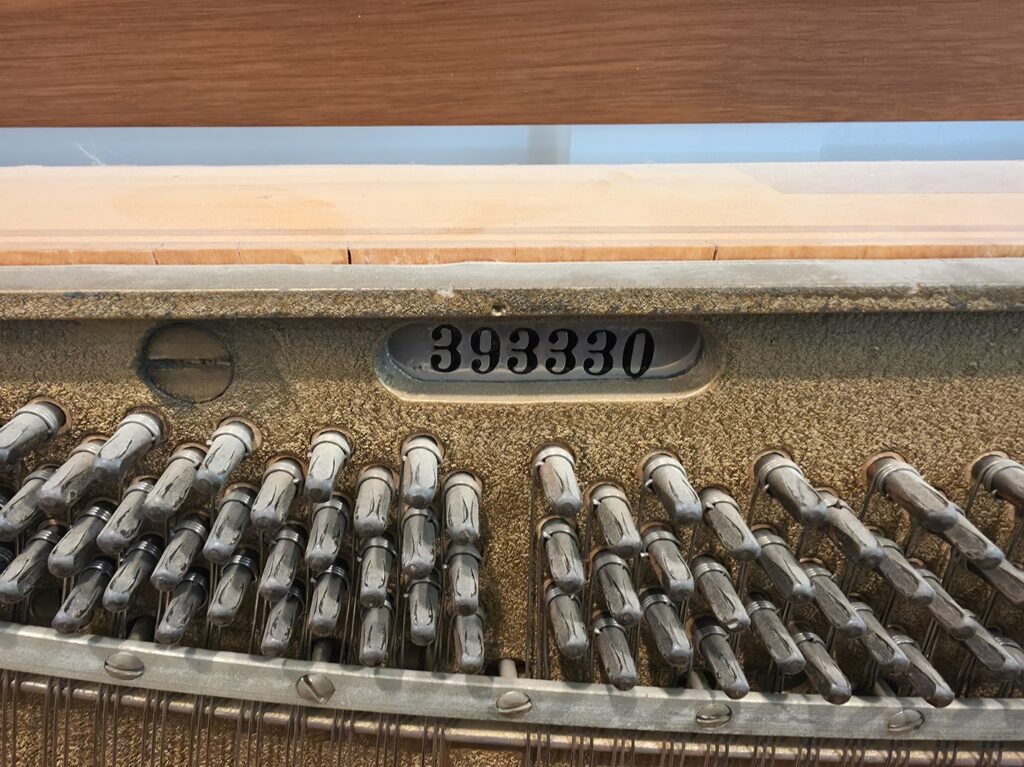
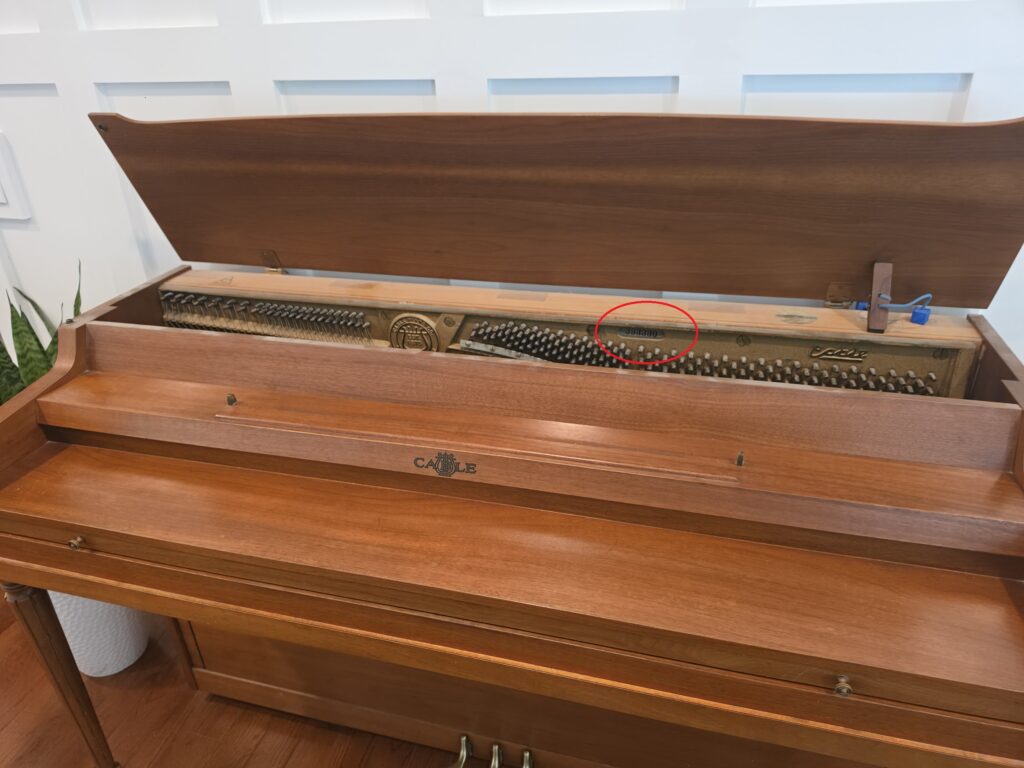
The Top Open Search: Open the top lid of the piano and look directly down into the upper action area.
The Soundboard Stamp: Look for a 4 to 6-digit number stamped directly into the wood of the soundboard, visible between the iron plate openings.
The Pinblock Face: On older Chicago-built uprights, the number is often stamped into the wood of the pinblock right above the tuning pins, usually near the center of the piano.
Cable Grand Pianos
The Plate Inset: Pull back the desk/music rack and look at the gold-painted cast iron plate near the tuning pins.
The Soundboard Cutout: Look down through the structural webs of the iron plate to see if the number is inked directly onto the soundboard wood below.
Do Not Use These Numbers
Cabinet or case numbers, including large handwritten or block-letter markings on the back of the piano.
Patent dates cast into the iron plate.
Numbers from a Cable-Nelson, Kingsbury, Wellington, Conover, or other related brand.
Any number found on a label or part that does not identify the instrument as a Cable piano.
What a Cable Serial Number Can Tell You
A Cable serial-number lookup can usually identify the approximate year the piano was made and distinguish between the original Chicago production period and later Aeolian-era production.
It cannot confirm the original owner or dealer, the exact month or day of manufacture, cabinet veneer or optional equipment, or whether the piano was later rebuilt or restored. It also cannot verify a player-piano variant from the base serial number alone.
Cable Piano History
The Cable Company was established in Chicago in 1880 by Herman D. Cable and became a major Illinois piano manufacturer. Its history is generally divided into two production periods:
Chicago era (1880–1936): Cable produced heavy uprights, grand pianos, and player-piano systems.
Aeolian era (after 1936): The Cable name was absorbed into the Aeolian-American organization, with later production focused heavily on console and spinet pianos
Reviewed by Joe Kemple, Master Piano Technician, Burd and Sons Piano Service · Updated September 2026
Our records cover the entire lifecycle of the core Cable sequence, allowing you to easily identify when your vintage American instrument was constructed.
Copyright © 2019 – present, Burd and Sons Piano Service