
HOW OLD IS MY PIANO?
FREE PIANO IDENTIFICATION & SERIAL NUMBER LOOKUP TOOL
What Year Was My Schiller Piano Made?
(Serial Number Lookup + Guide)
DIRECT ANSWER
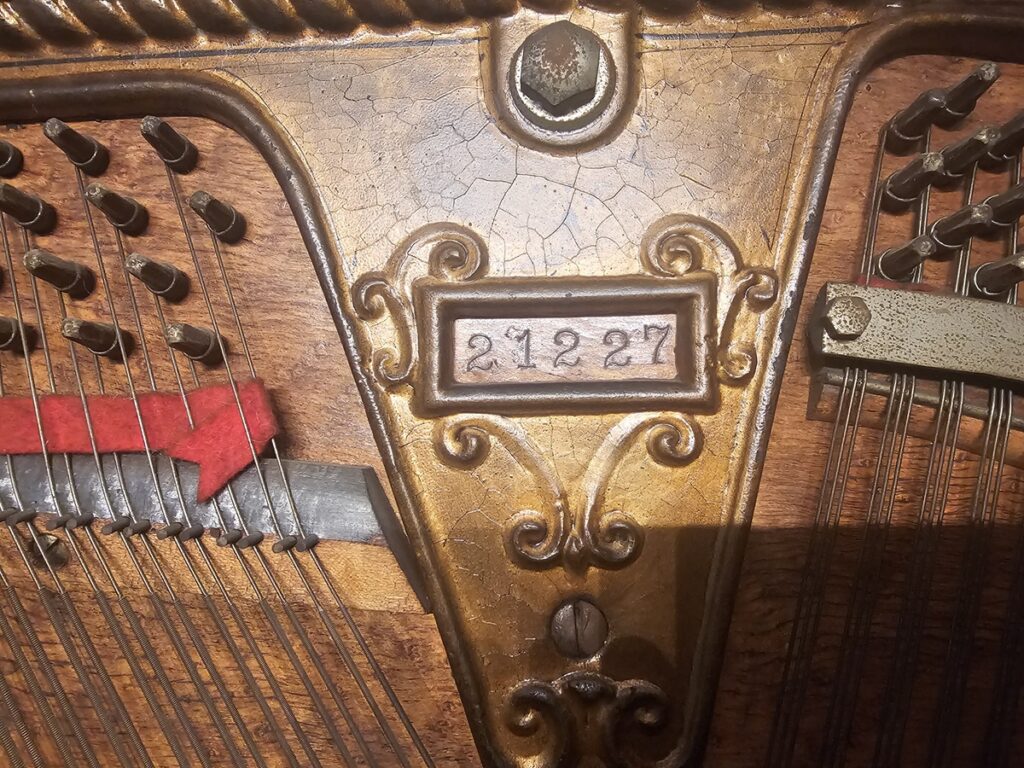
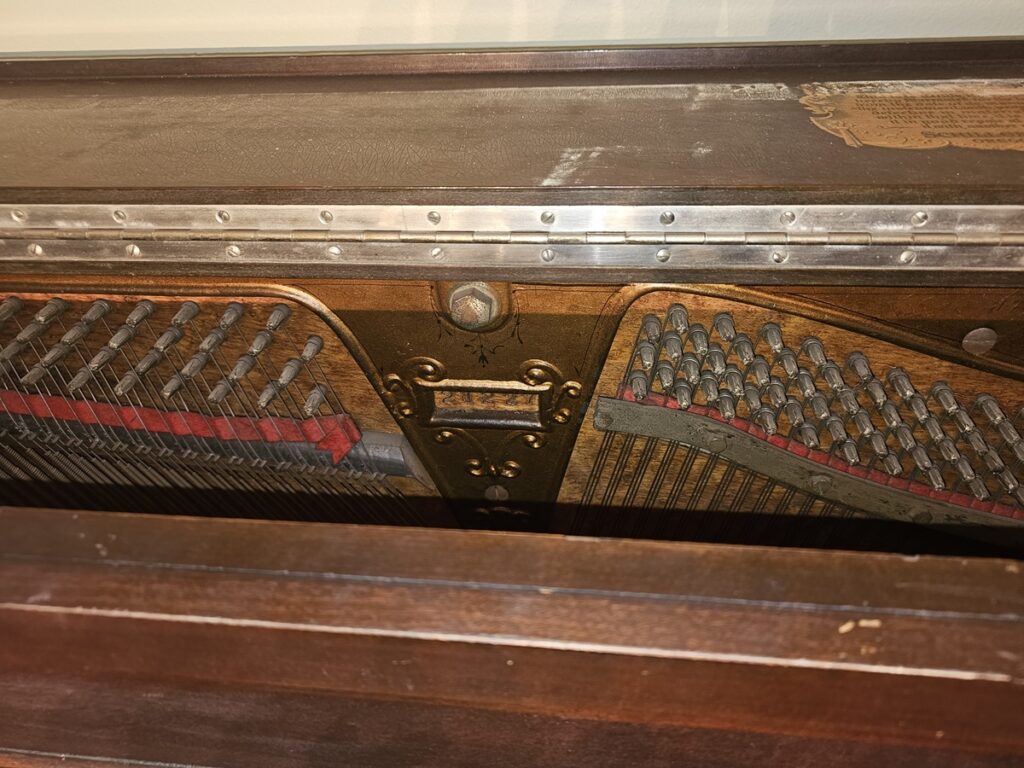
A Schiller piano can often be dated approximately from its serial number, which is usually stamped on the cast-iron plate near the tuning pins or another internal structural component. Enter the full number in the lookup tool to identify its likely production era.
The important limitation is that Schiller was produced through more than one manufacturing arrangement, rather than one continuous factory sequence. Different periods may use unrelated serial-number systems, so some results are an estimated range rather than a precise year. Do not use a number from an external decal, paper label, or wooden cabinet part.
SCHILLER SERIAL NUMBER LOOKUP TOOL
Your piano was manufactured in .
Would you like a free, personalized certificate documenting your piano's age? Perfect for keeping in your files or your piano bench.
No email or login needed, just click and print!
Sample Certificate

Want to know how much this piano is worth?
Get a professional piano valuation report with its estimated value, place of manufacture, and other important details—useful for insurance, estate records, and buying or selling a piano. Your report also includes a printable valuation certificate.
If your piano has little or no market value, you won’t be charged.
Sample Valuation Report — Page 1

WHERE IS THE SERIAL NUMBER ON A SCHILLER?
SCHILLER GRAND PIANOS
Open the lid and inspect the cast iron plate near the tuning pins. The serial number is typically stamped into the metal frame, often in the bass or central section of the plate.
SCHILLER UPRIGHT PIANOS
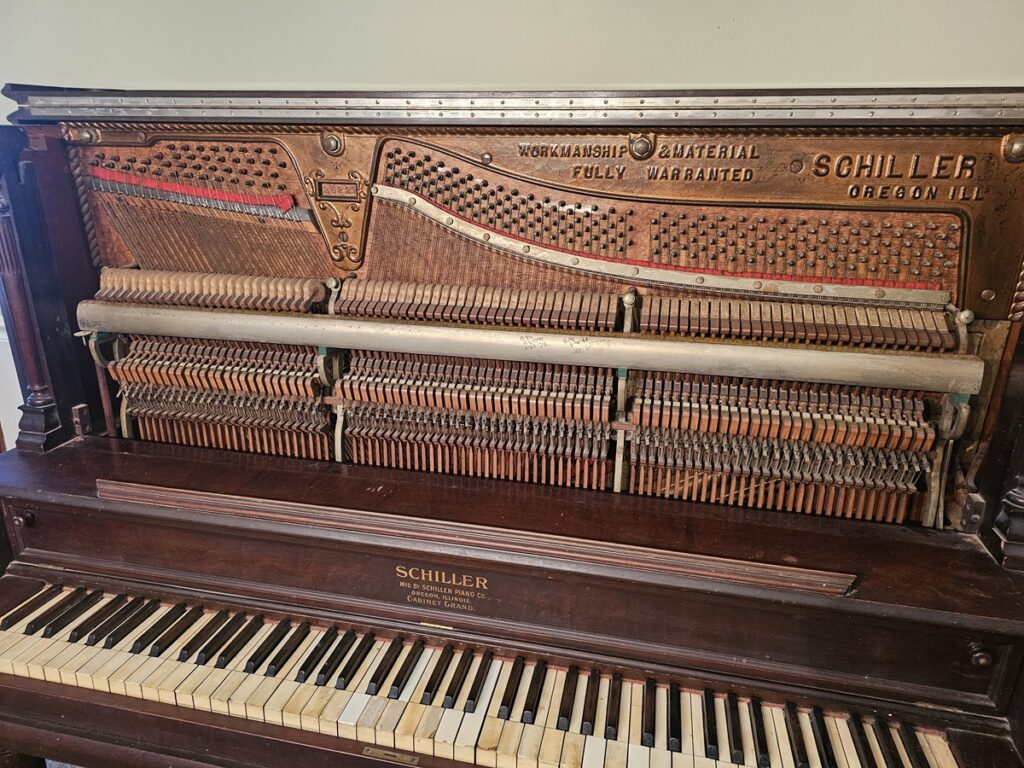
Open the top lid or front panel. The serial number is usually stamped into the cast iron plate inside the piano, near the tuning pins or structural frame.
In some cases, visibility may be limited and require a flashlight due to internal cabinetry design.
Important identification note
Schiller serial numbers are typically found on structural internal components rather than external wood surfaces, decals, or paper labels. Non-metal markings should not be used for dating.
DO NOT USE THESE NUMBERS
Numbers on external wood surfaces
Paper labels or decals
Incomplete serial numbers with unreadable or omitted digits
Numbers that appear to identify a component rather than the complete piano
A number assumed to follow one universal Schiller sequence
WHAT A SCHILLER SERIAL NUMBER CAN TELL YOU
A Schiller serial-number lookup can often provide an approximate manufacturing year or production range and identify the piano’s general production era. In some cases, it may also help indicate a manufacturing batch or source.
It cannot reliably provide an exact production day or month, a single brand-wide timeline, or definitive factory identification without additional context.
SCHILLER PIANO HISTORY
Schiller is a piano brand used during different production periods for instruments made under varying supply arrangements. It was not one long-running factory with a single continuous serial-number system.
Different manufacturing sources used different numbering practices.
Construction, serial-number format, and dating reliability may vary substantially by era and factory.
This is why Schiller dating often requires an era-based interpretation rather than a precise year-by-year match.
Reviewed by Joe Kemple, Master Piano Technician, Burd and Sons Piano Service · Updated September 2026
Our database covers Schiller piano serial numbers across multiple production sources and time periods where available, including both earlier and later branded instruments.
Copyright © 2019 – present, Burd and Sons Piano Service