
HOW OLD IS MY PIANO?
FREE PIANO IDENTIFICATION & SERIAL NUMBER LOOKUP TOOL
What Year Was My Brambach Piano Made?
(Serial Number Lookup + Guide)
DIRECT ANSWER
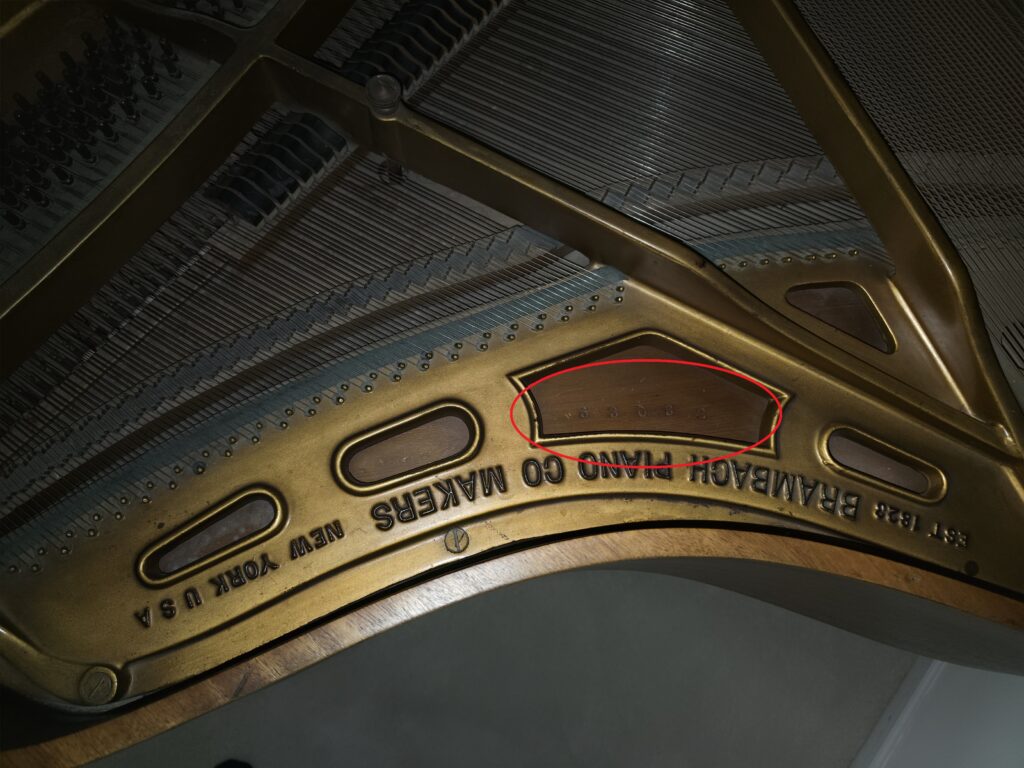
Most Brambach pianos can be dated by the serial number stamped inside the piano. On upright and player pianos, the number is usually found on the cast-iron plate above the tuning pins. On Brambach grands, it may appear in a less obvious location—sometimes visible through an opening in the plate near the treble side or soundboard.
If your piano is marked Kohler-Brambach, select Brambach in the lookup tool. If it is marked only Kohler & Campbell, select Kohler & Campbell instead. Patent dates, casting numbers, and small numbers on piano parts are not serial numbers and should not be used to determine the piano’s age.
BRAMBACH PIANO SERIAL NUMBER LOOKUP TOOL
Your piano was manufactured in .
Would you like a free, personalized certificate documenting your piano's age? Perfect for keeping in your files or your piano bench.
No email or login needed, just click and print!
Sample Certificate

Want to know how much this piano is worth?
Get a professional piano valuation report with its estimated value, place of manufacture, and other important details—useful for insurance, estate records, and buying or selling a piano. Your report also includes a printable valuation certificate.
If your piano has little or no market value, you won’t be charged.
Sample Valuation Report — Page 1

WHERE IS THE SERIAL NUMBER ON A BRAMBACH PIANO?
Brambach serial numbers are most often stamped into the cast-iron plate inside the piano. Look for a clearly stamped number—not a decorative patent date or a small casting number.
BRAMBACH UPRIGHT AND PLAYER PIANOS
• Lift the top lid of the piano cabinet.
• Look straight down at the cast-iron plate above the tuning pins.
• The serial number is usually stamped into the plate near the upper center or upper right area.
• On some early uprights and player pianos, also check the wooden back frame, the top edge of the case, or the inside of the cabinet near the plate.
BRAMBACH GRAND AND BABY GRAND PIANOS
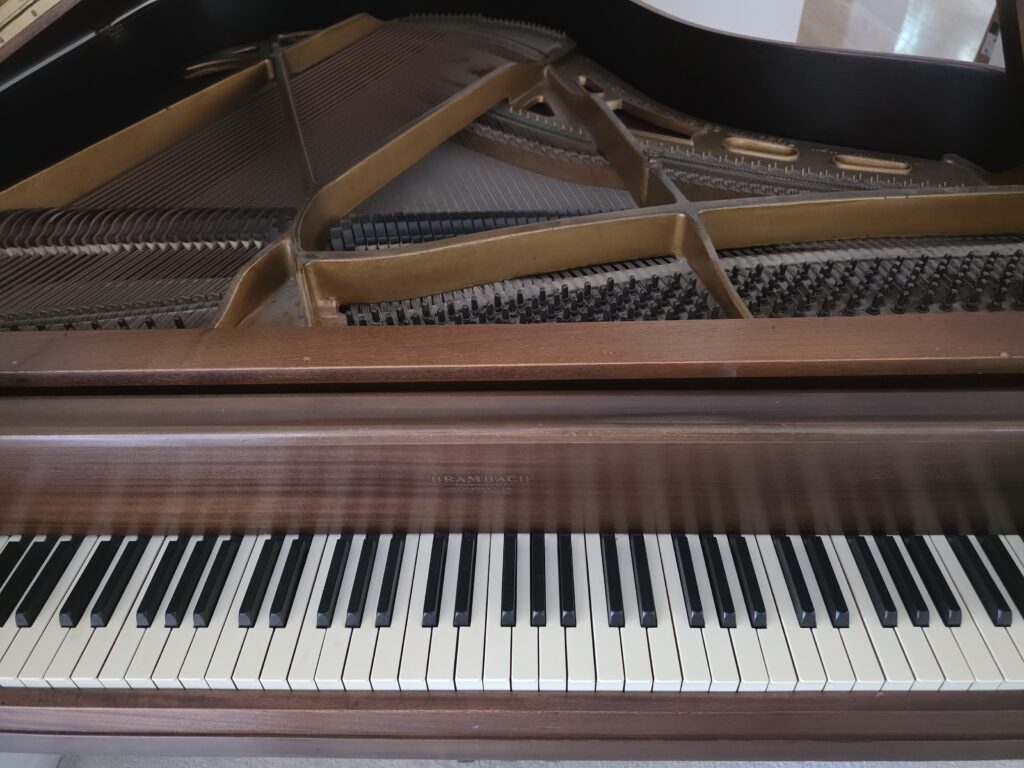
• Raise the main lid and secure it with the prop stick.
• Look down at the gold cast-iron plate over the strings and soundboard.
• The serial number is commonly stamped near the tuning pins, often in the upper plate area near the treble strings.
• If necessary, slide or remove the music desk to see the plate more clearly.
• On some older grands, the number may be stamped on the soundboard or visible through an opening in the plate.
Do Not Use These Numbers
- Patent dates cast into the plate
- Small part or casting numbers
- Numbers on the action or pedal mechanism
- A Kohler & Campbell number when Brambach is not named on the piano
What a Brambach Serial Number Can Tell You
After entering the correct serial number, you can usually determine:
• The manufacturing year or a close production-year range.
• Whether your piano belongs to the earlier independent Brambach era or the later Kohler-Brambach period.
The serial number will not normally identify:
• The original retail dealer or original owner.
• The exact month or day the piano left the factory.
• The cabinet veneer, finish, or original player-piano equipment.
• Whether the piano has been rebuilt, restrung, refinished, or otherwise restored since leaving the factory.
Brambach Piano History
The Brambach Piano Company was established in New York in 1823 by Franz Joseph Brambach. Over time, Brambach grew into one of the larger American piano manufacturers, producing instruments under its own name as well as building pianos for other brands through private-label contracts.
Brambach developed a strong reputation during the late nineteenth and early twentieth centuries for well-built home pianos and unusually compact grands.
• The small-grand specialty: Brambach devoted substantial attention to baby grands designed for ordinary homes. Its compact grands were marketed to provide a fuller, richer sound than buyers expected from their small footprint.
• The Tone Expander: Many Brambach grands featured the company’s patented “Tone Expander” concept and distinctive soundboard design, intended to increase tonal presence in smaller instruments.
• Player pianos and uprights: Brambach also produced substantial numbers of upright and player pianos during the peak American piano-production years.
• Private-label manufacturing: The Brambach factory built pianos for other well-known American names, including Kohler & Campbell and Mathushek.
• Kohler-Brambach era: In the late 1920s, the Kohler-Brambach name began appearing on instruments. Later serial-number records may therefore overlap with Kohler & Campbell production. The Brambach name was discontinued in 1957.
Reviewed by Joe Kemple, Master Piano Technician, Burd and Sons Piano Service · Updated September 2026
Our database includes Brambach piano serial numbers across the major production eras, including the later Kohler-Brambach transition.
Copyright © 2019 – present, Burd and Sons Piano Service