
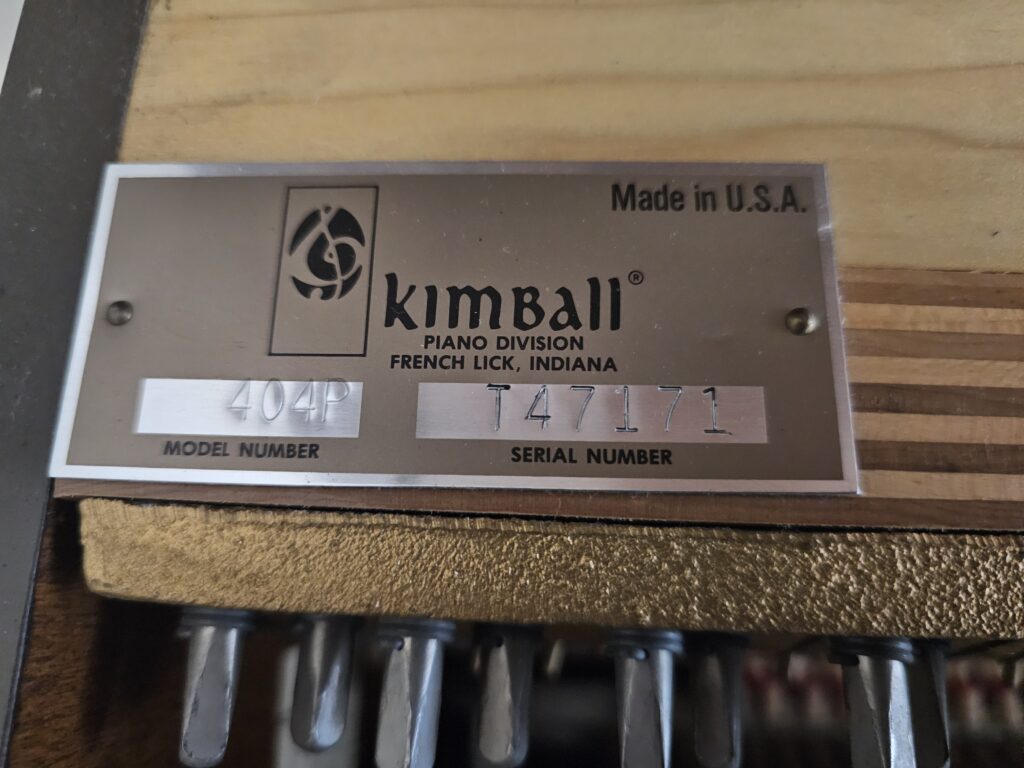
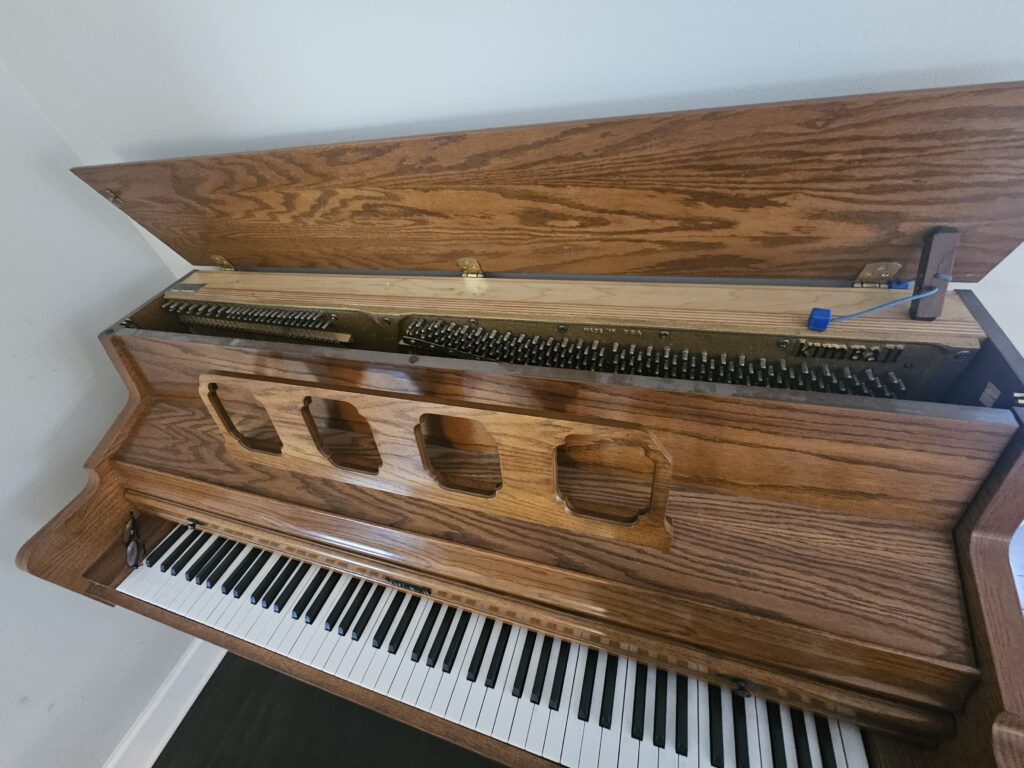
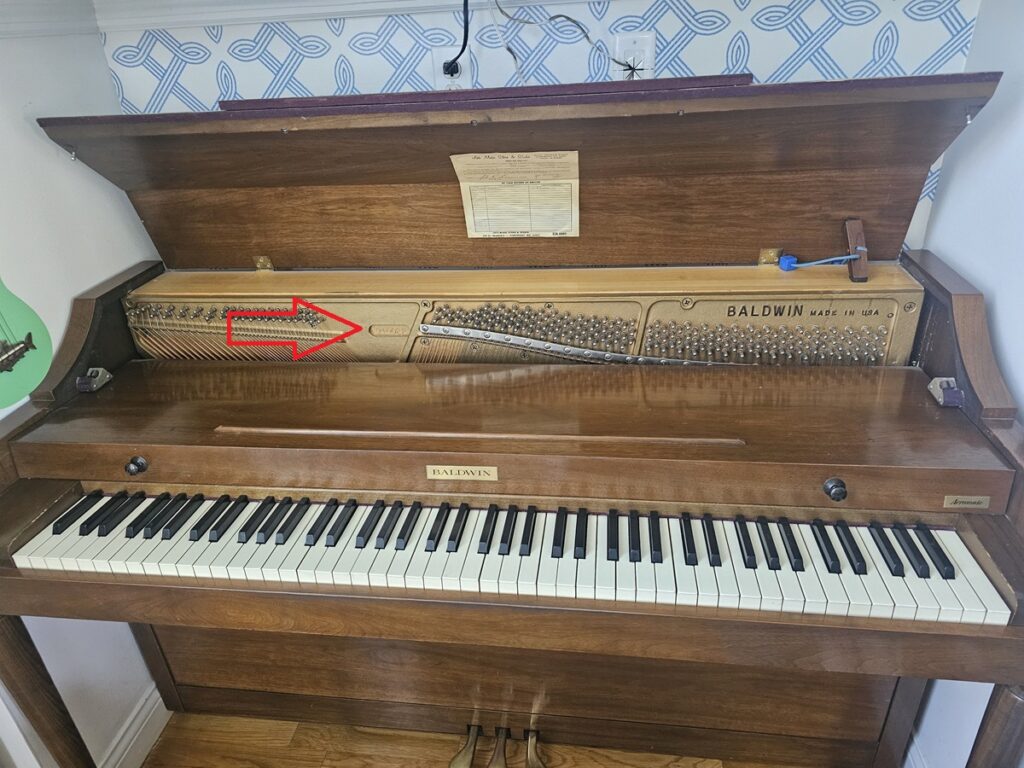
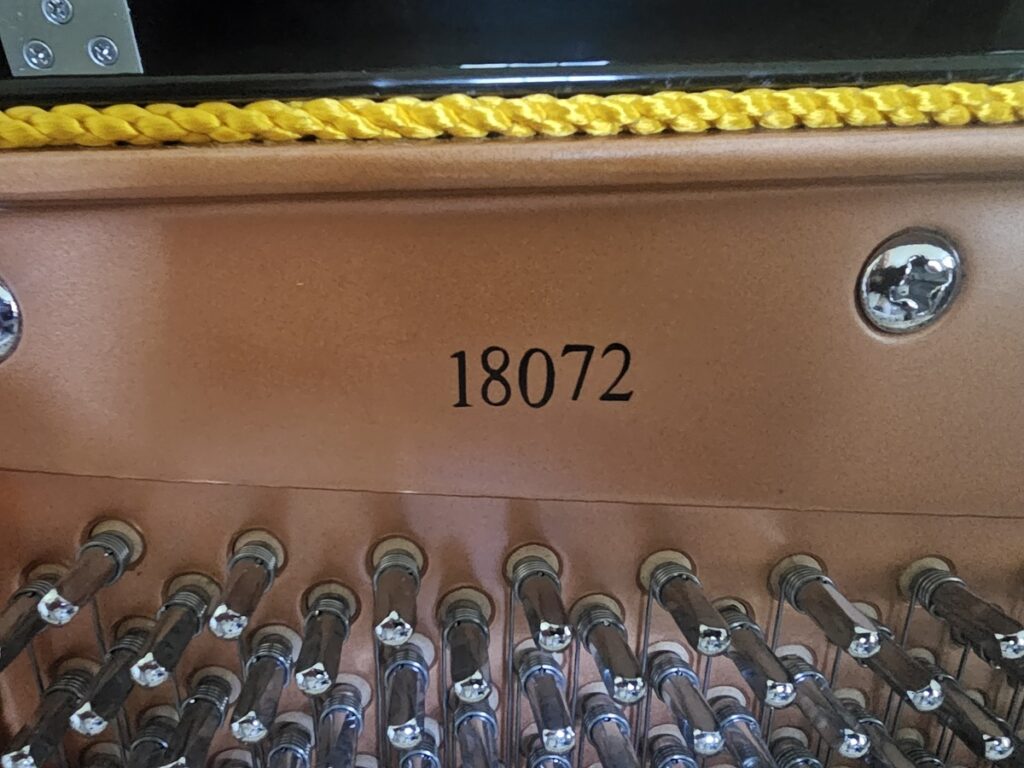
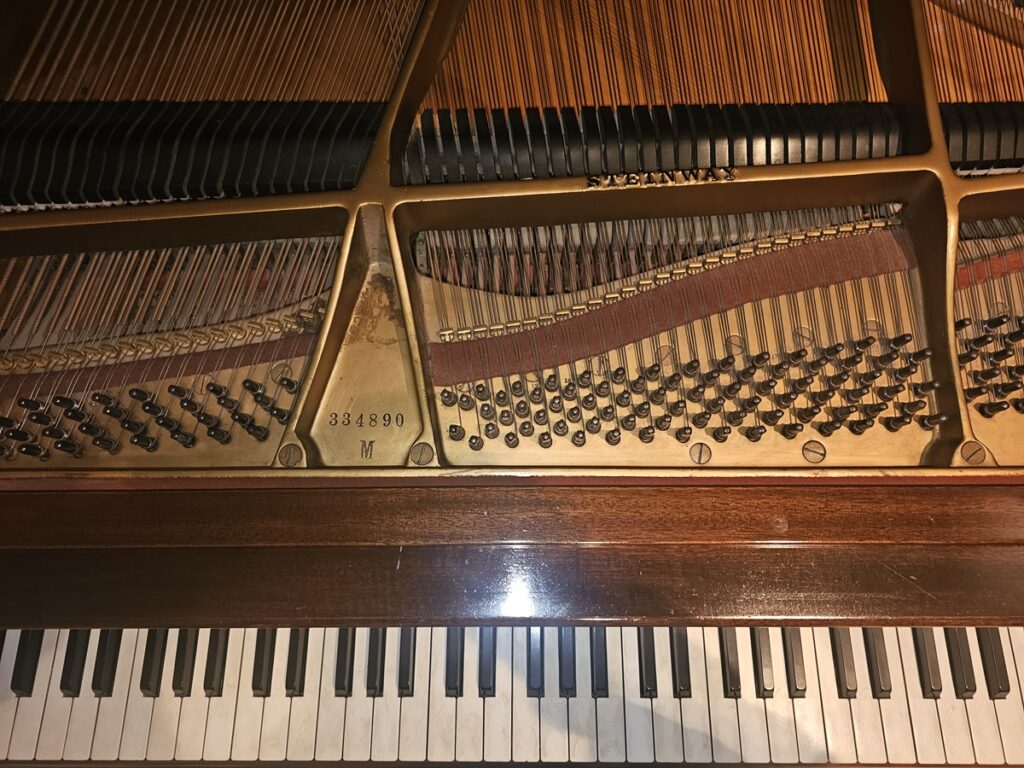
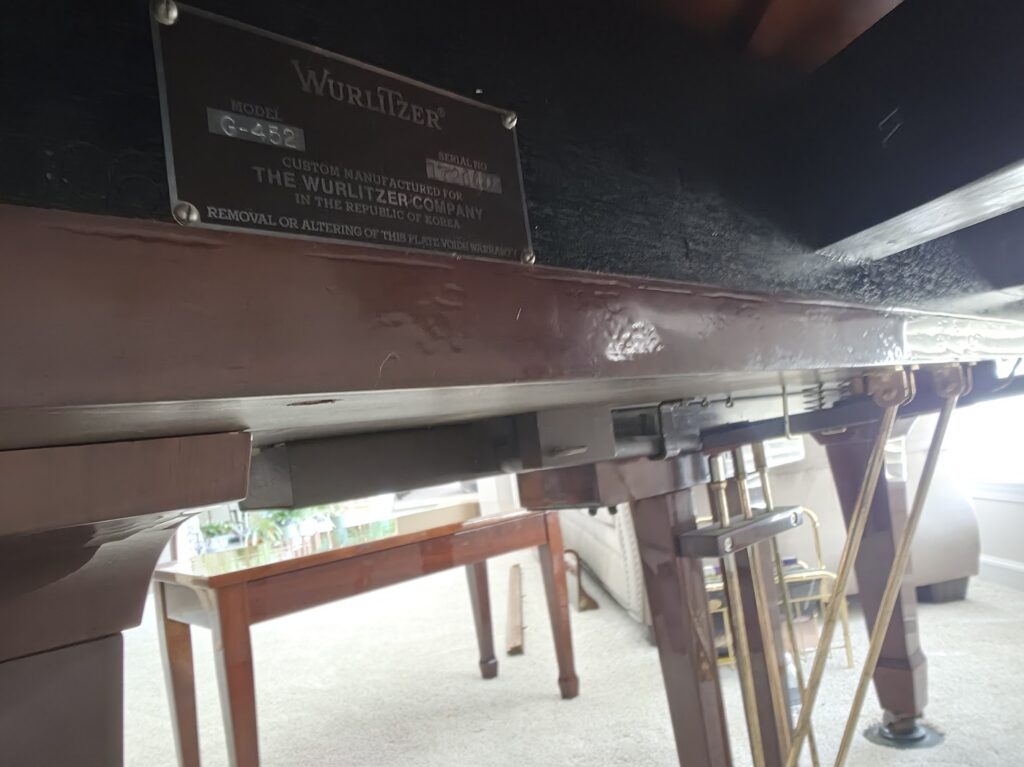
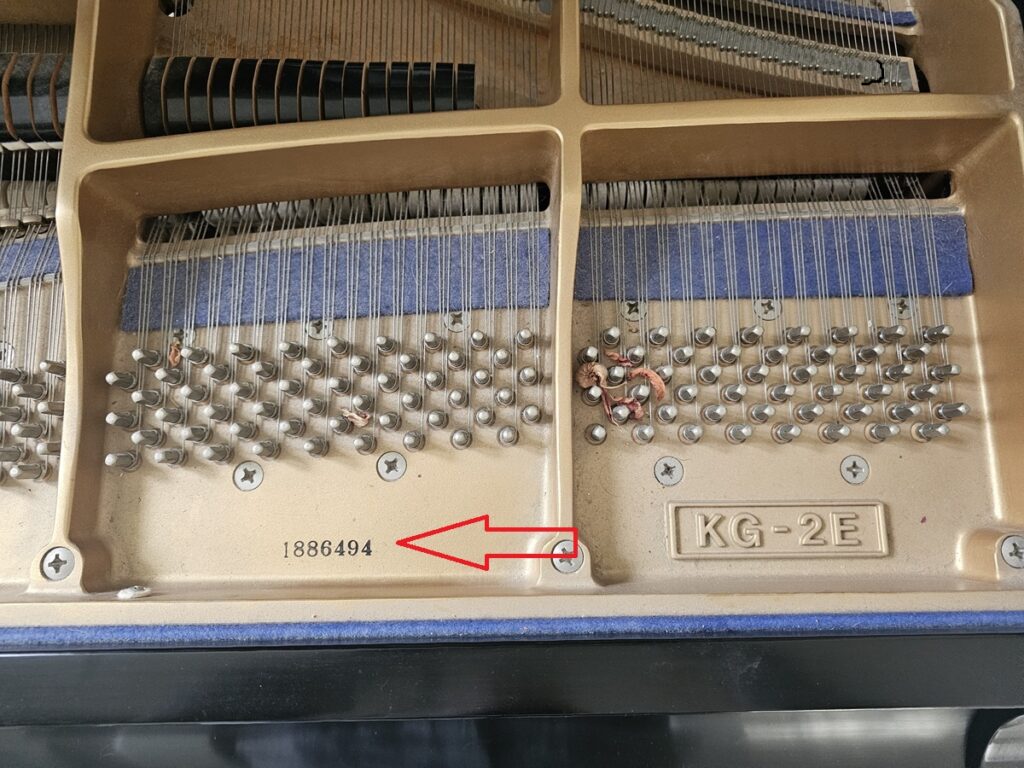
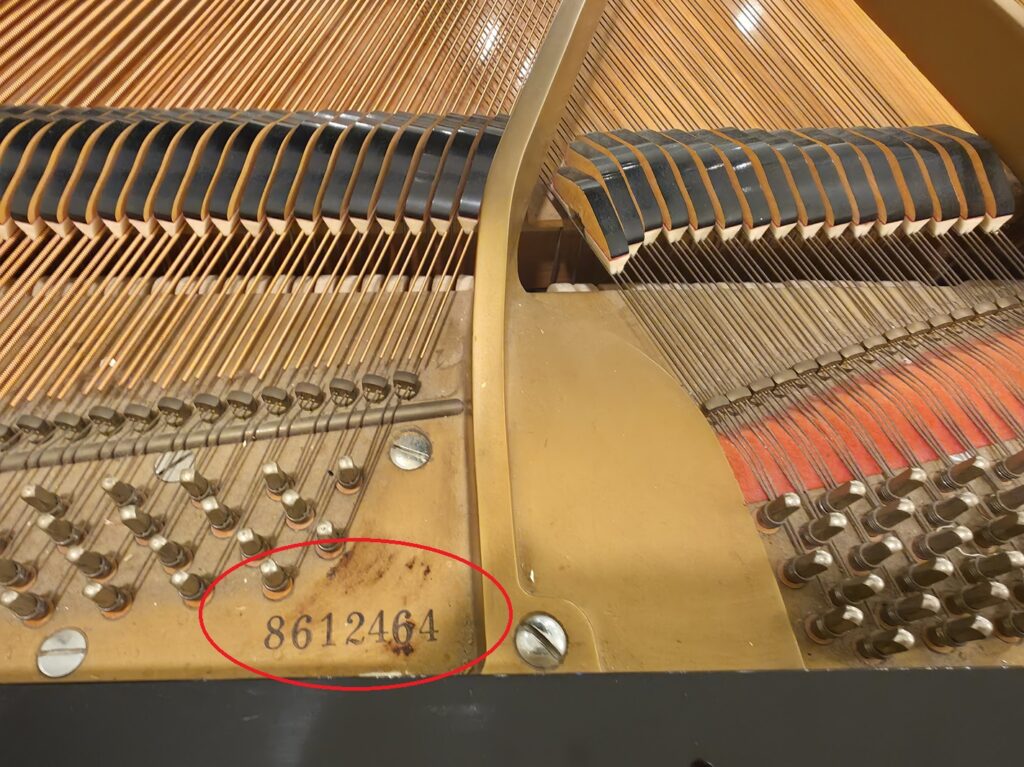
Find the age of your piano using its serial number. Most piano manufacturers use stamped serial numbers to indicate production periods, which can be converted into approximate manufacturing years using this database.
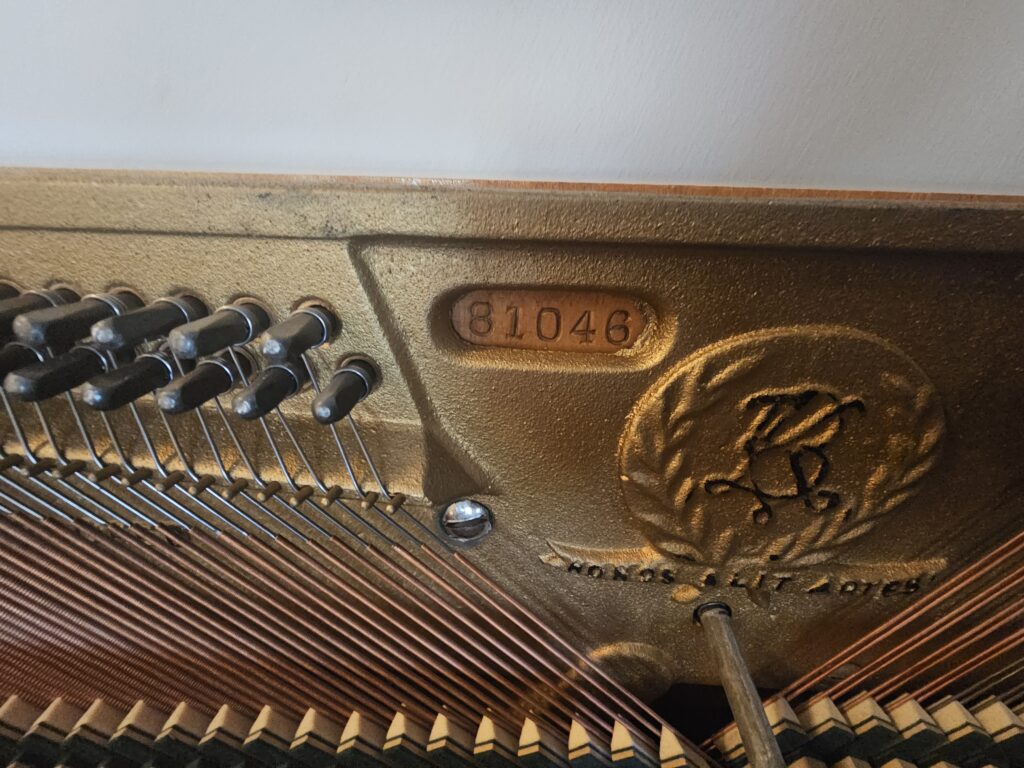
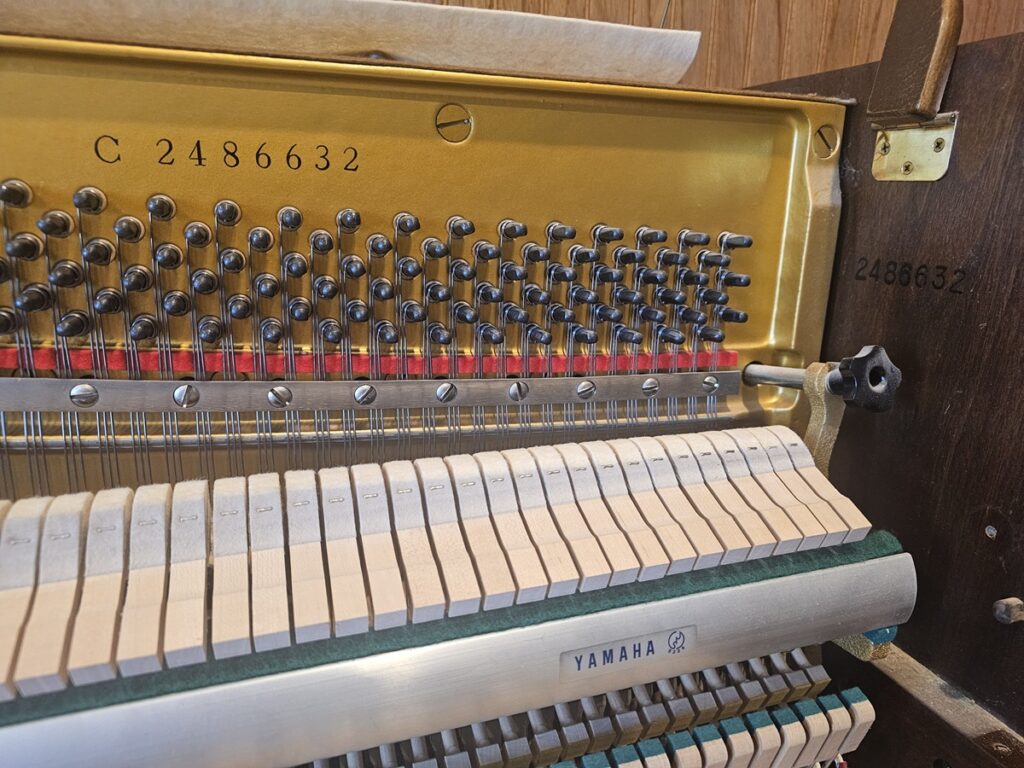
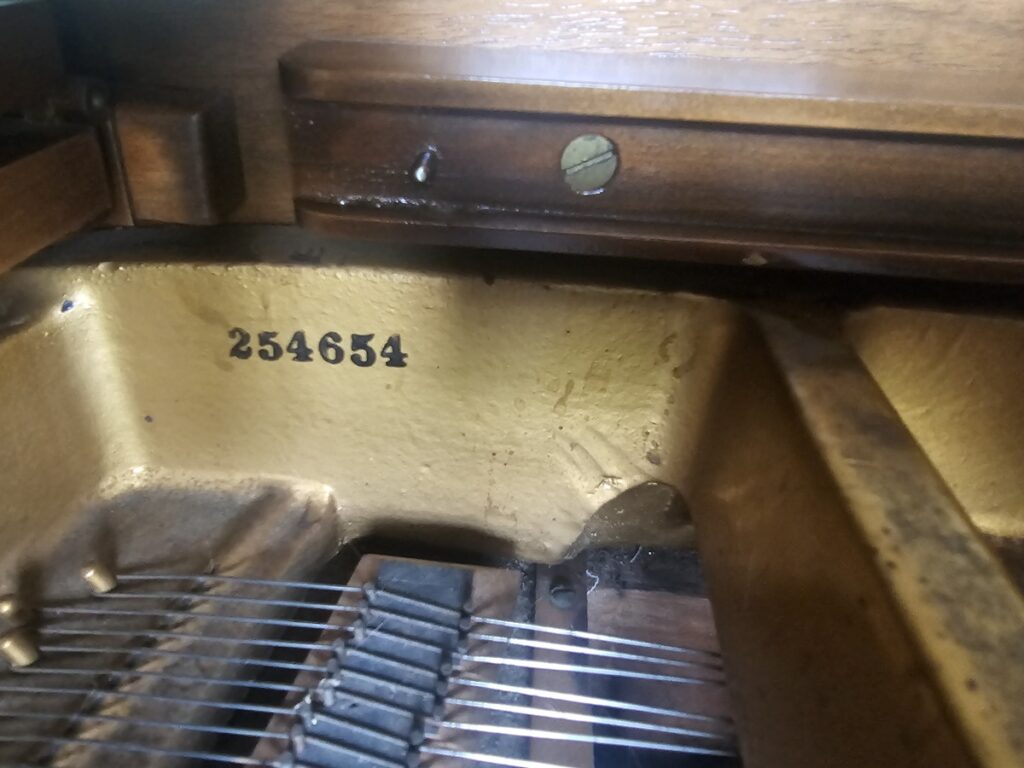
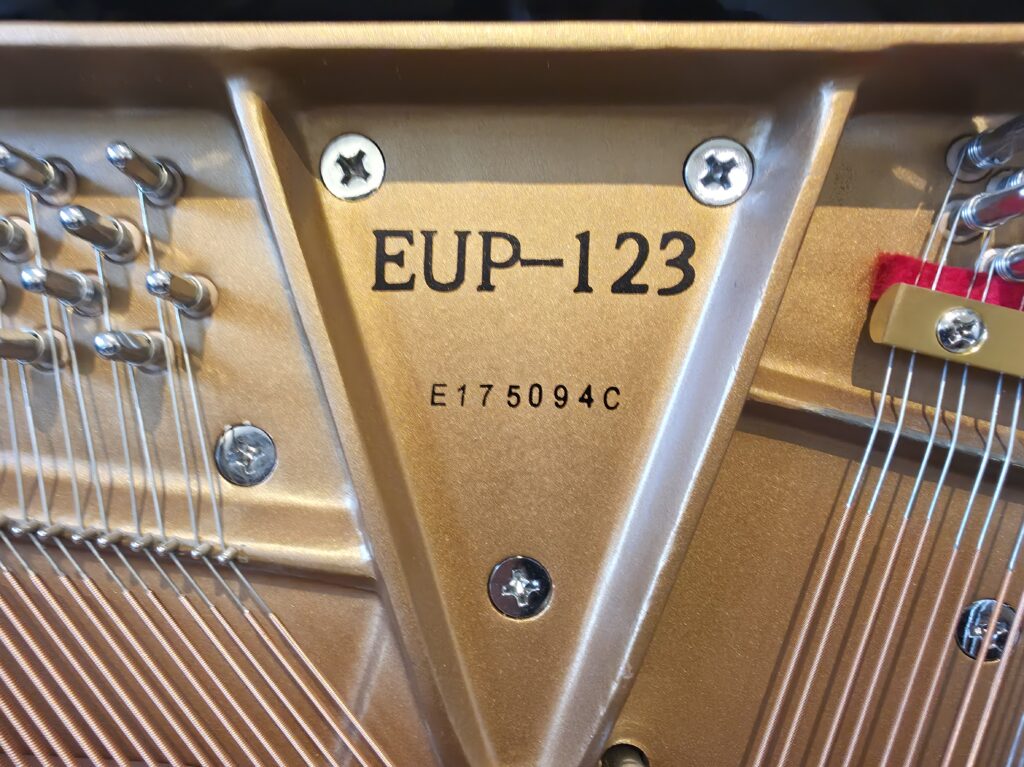
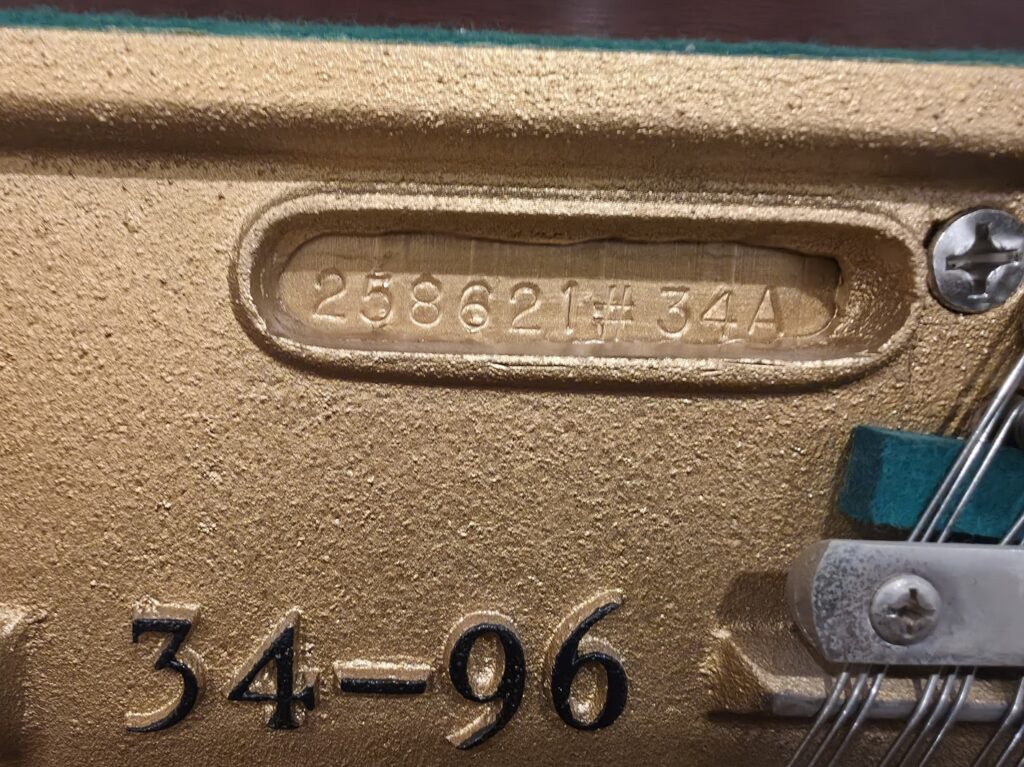
Open the top lid. Look inside the frame area for a stamped number on the cast-iron plate or internal metal structure. This is the most common place to find it.
Occasionally, I come across an upright where the only place the serial number is printed is on the back of the piano.
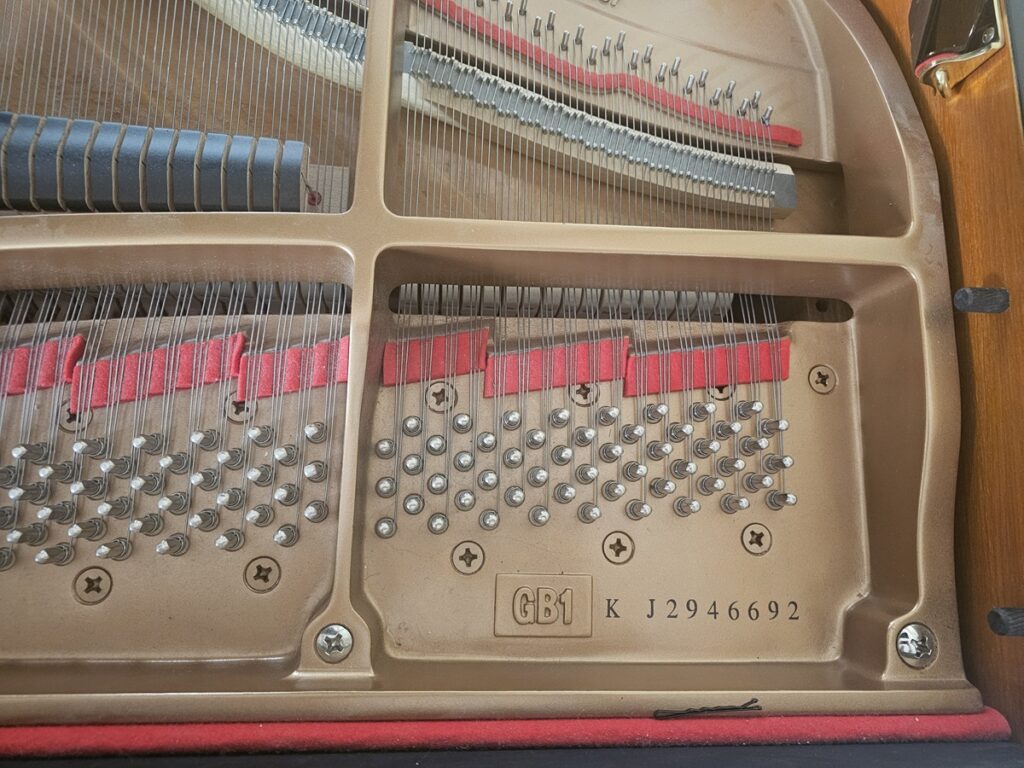
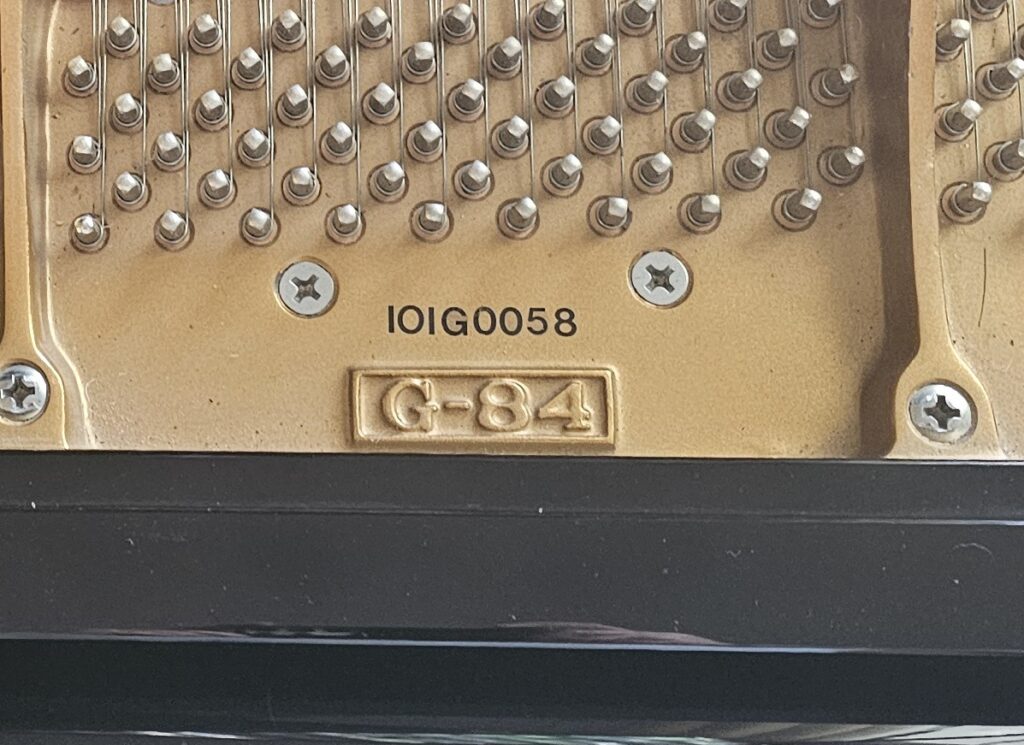
The most common place to find the serial number on a grand piano is printed directly onto the cast iron plate.
Open the lid and look near the tuning pins. Often you will need to remove the music desk in order to see it. To remove the music desk, in almost all cases, just slide it towards the keys of the piano until it comes out. Sometimes, there is a notch and you must pull upwards while sliding it.
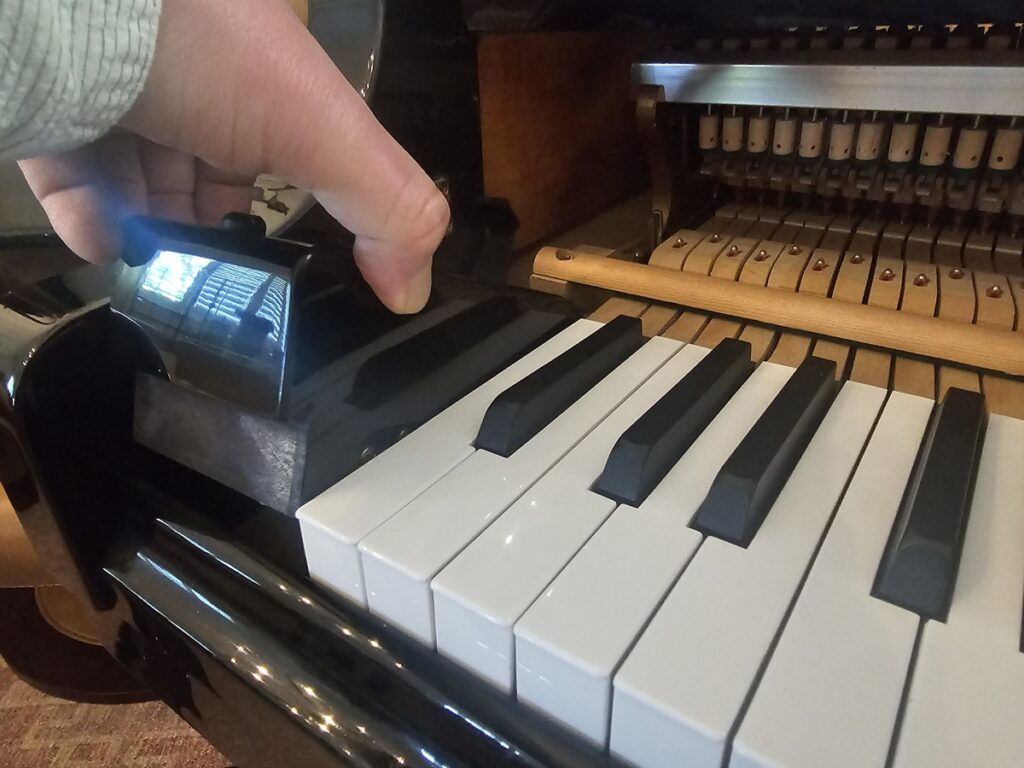
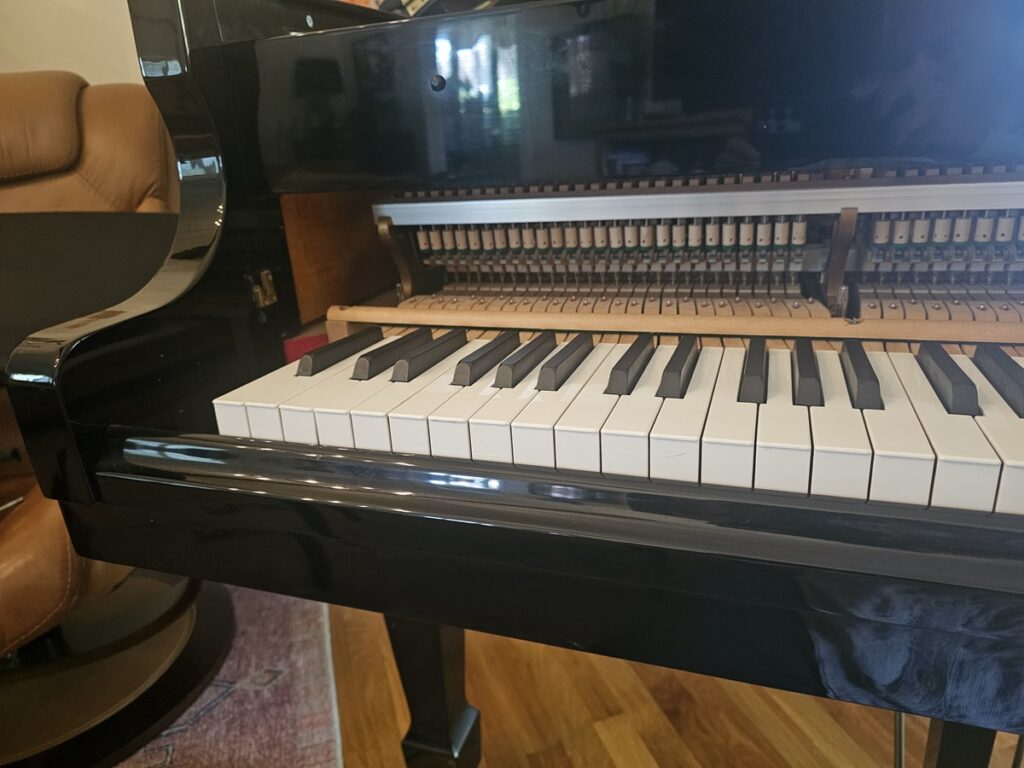
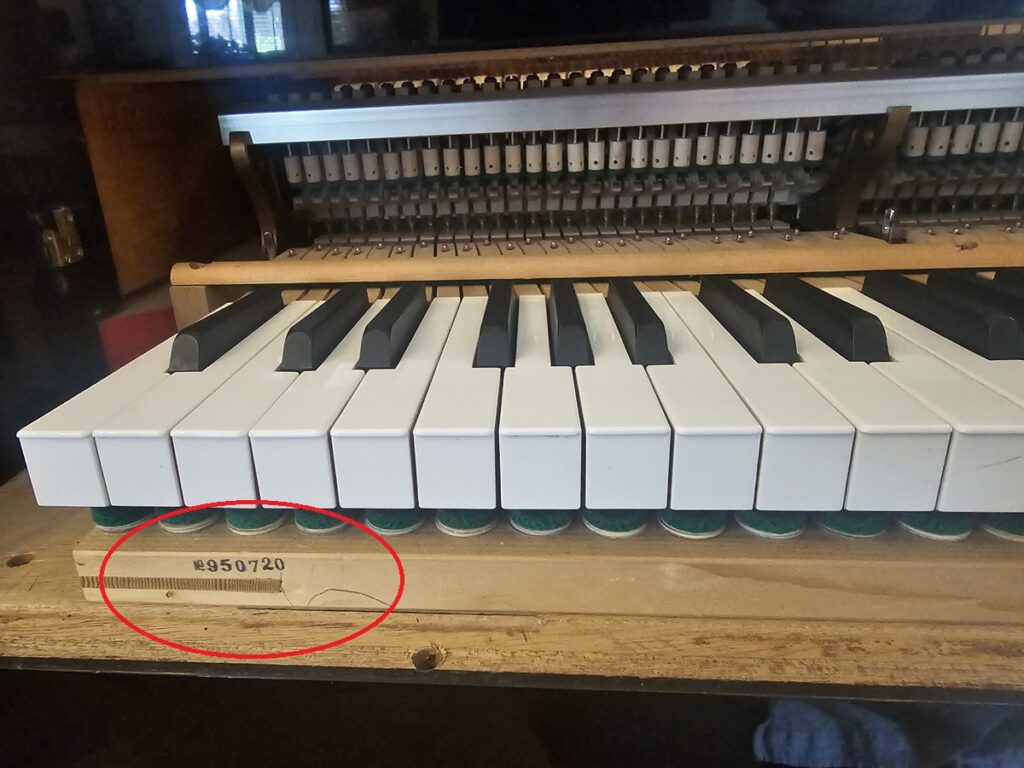
Note: this method is advanced and requires some disassembly.
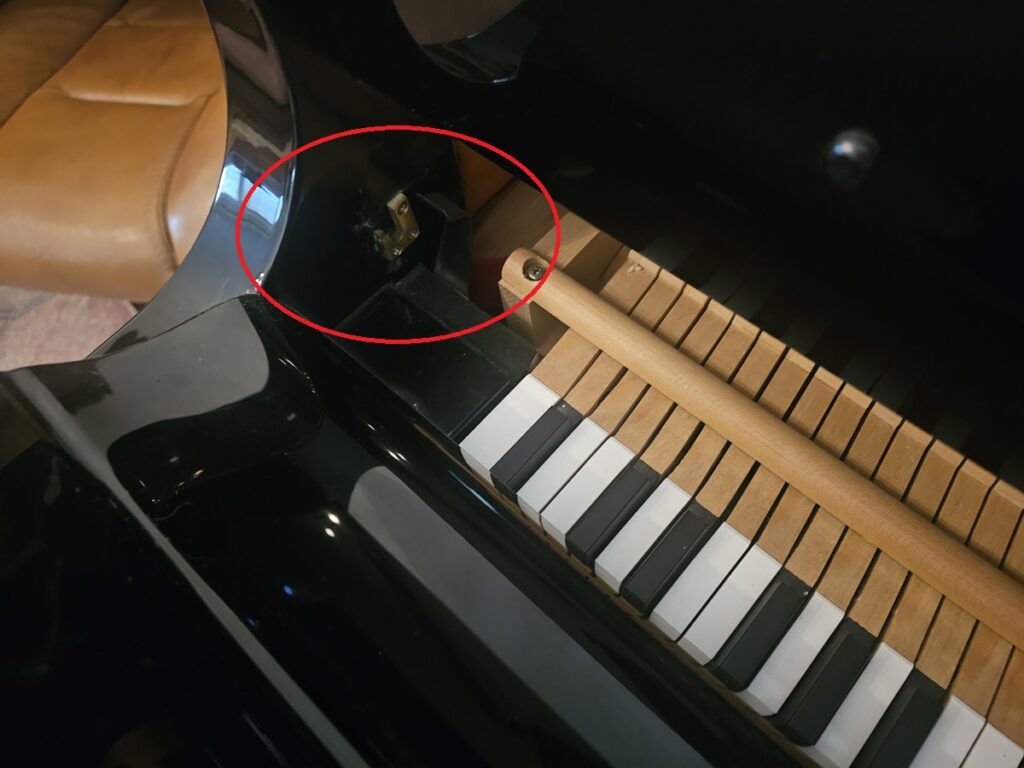
Note: on some pianos, you can skip straight to the last step and simply remove the keyslip without having to remove anything else, though it is usually locked into place by the cheek blocks.
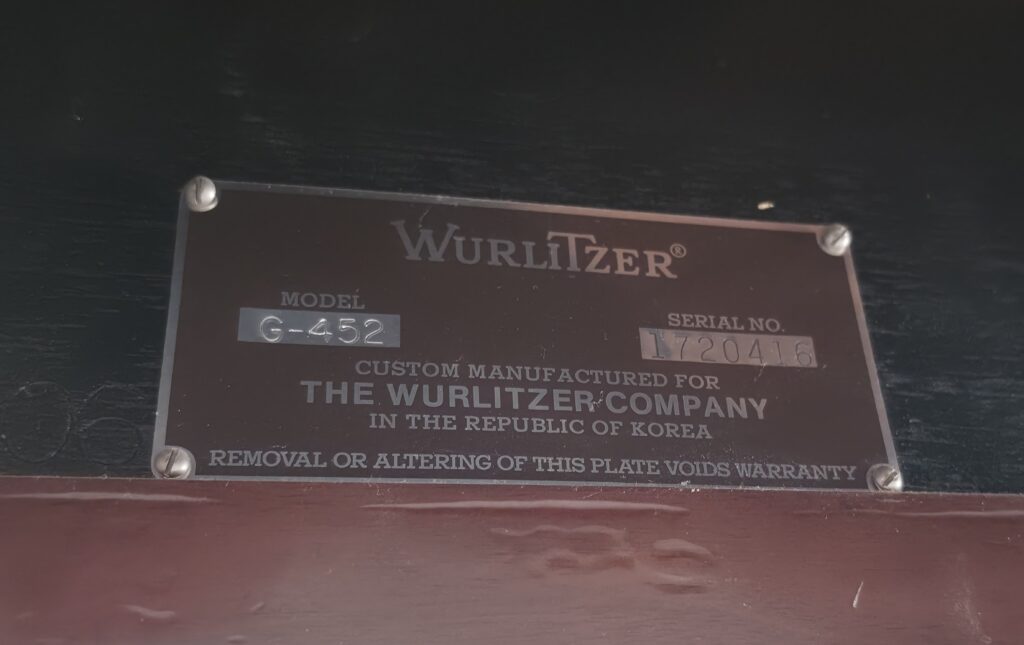
• confusing model numbers with serial numbers
• misreading stamped digits due to wear, reflection, or plate corrosion
• incorrectly including prefix letters in the lookup tool
In most cases, incorrect results are caused by serial misidentification rather than lookup system error.
If you are still unable to identify your serial number or manufacturer, visit the brand-specific guides for detailed visual references.
Even as a piano tech with 38 years of experience, I sometimes cannot find the serial number because the manufacturer simply did not make it available.
Do NOT enter the letter into the serial number field.
If your serial number starts with a number, choose just the maker’s name in the dropdown list (i.e. “Yamaha”)
If your serial number starts with a letter(s), choose the appropriate maker entry (i.e.” Yamaha, serial starts with H”)
These makers have different serial number ranges for Uprights and Grands
For Uprights, choose just the name of the maker in the dropdown list (i.e. Young Chang)
For Grands, choose the maker’s name which is followed by Grand (i.e. “Young Chang Grands Only”)
Check Your Piano’s Pitch: Most pianos go flat over time. Use our free Pitch Checker to see if your piano is currently at Concert Pitch (A440).
How Often Should My Piano Be Tuned?: (maintenance recommendations)
This tool uses curated manufacturer serial records and historical production data to estimate piano age and origin. It is designed for owners, buyers, and technicians seeking quick identification and context for their instrument. Meet the piano technician behind this tool.
Copyright © 2019 – present, Burd and Sons Piano Service